
How Ceramic Coatings Prevent Oxidation
Updated: Sep 29
A parked vehicle in Arizona can take a beating without ever leaving the driveway. Sun, heat, dust, hard water, and airborne contaminants work on your paint every day, which is why so many owners ask how ceramic coatings prevent oxidation and whether they are worth it. The short answer is yes, but not because they make paint invincible. A quality coating helps by creating a protective barrier that reduces direct exposure to the conditions that cause paint to break down in the first place.
What oxidation actually does to your paint
Oxidation is the slow chemical breakdown of a vehicle’s painted surfaces when they are exposed to oxygen, UV rays, heat, and contamination over time. On a daily driver, it usually shows up as fading, dullness, chalky texture, loss of depth, and clear coat failure if the damage gets far enough.
In Arizona, the process tends to move faster than many people expect. Intense sun and high surface temperatures put constant stress on the clear coat. Once that outer layer starts drying out and weakening, the finish becomes more vulnerable to contaminants, mineral deposits, and washing damage. That is when paint starts looking tired even if the vehicle is not very old.
Oxidation is not the same thing as a little dust or light water spotting. It is deeper than that. Washing may improve the look for a day or two, but it does not stop the underlying breakdown.
How ceramic coatings prevent oxidation
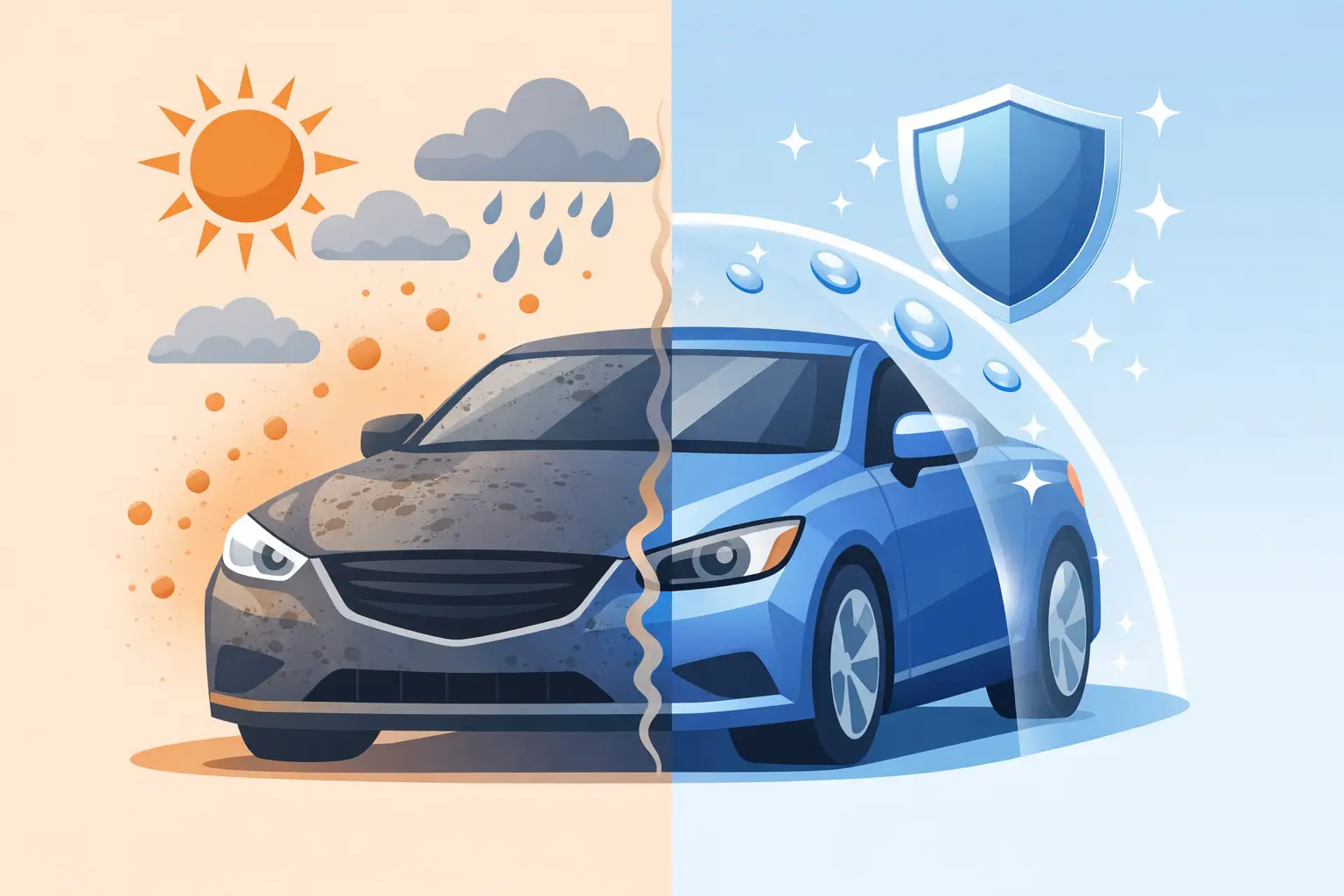
Ceramic coatings help prevent oxidation by adding a cured protective layer over the clear coat. That layer acts as a shield between your paint and the environment, reducing how much UV exposure, airborne contamination, moisture, and chemical fallout reach the surface directly.
The biggest benefit is not magic shine. It is reduced exposure. When the clear coat has less direct contact with harsh elements, it breaks down more slowly. That matters in extreme climates where vehicles sit outside for hours at a time.
A coating also makes it harder for contaminants to bond aggressively to the paint. Dust, road grime, bird droppings, bug residue, and mineral-heavy water still land on the vehicle, but they are generally easier to remove before they can do long-term damage. That easier-cleaning effect is a real part of oxidation prevention because contamination left sitting on paint speeds up surface deterioration.
There is also the UV factor. Quality ceramic coatings are designed to resist ultraviolet exposure better than unprotected paint alone. They do not block 100 percent of UV rays, and no honest detailer should claim otherwise. What they do is take part of the hit so your clear coat does not absorb all of it directly, day after day.
Why coatings matter more in harsh climates
If you live in a milder region and keep your vehicle in a garage most of the time, a ceramic coating is still useful, but the urgency is different. In the East Valley and nearby desert communities, oxidation prevention is not just about appearance. It is about preserving the finish before damage becomes expensive to correct.
Paint correction can remove some oxidation if it is caught early. Once clear coat failure starts, correction is no longer the answer. At that stage, the permanent fix is often repainting. That is where ceramic coatings make financial sense for many owners. They are not only about gloss. They are about slowing the kind of damage that turns into bigger repair costs later.
This is especially relevant for trucks, SUVs, RVs, work vehicles, and boats that spend long hours outdoors. Larger vehicles also cost more to restore, so preserving the surface early usually pays off better than trying to recover it later.
Ceramic coating is not a substitute for prep
One of the biggest misunderstandings around coatings is that they can cover neglect. They cannot. If paint already has embedded contamination, oxidation, swirl marks, or faded areas, a coating will not fix those issues. It will lock in the current condition, good or bad.
That is why prep work matters so much. A proper wash, decontamination, clay treatment if needed, and paint enhancement or polishing create the surface that the coating will protect. Skipping those steps usually leads to weaker results and less visual improvement.
For owners comparing prices, this is where cheaper coating packages can be misleading. If the service leaves out correction or surface prep, the coating may still be applied, but the finish underneath is not truly being restored or set up for the best bond. No upsell, just shine only works when the process is honest about what the paint needs before protection goes on.
What a ceramic coating protects against
Ceramic coatings are most effective as part of a real-world protection strategy. They help reduce damage from UV rays, oxidation, light chemical exposure, hard water minerals, bird droppings, bug splatter, and general grime buildup. They also improve hydrophobic behavior, which means water tends to bead and slide off more easily.
That hydrophobic effect is useful, but it should not be oversold. Water beading does not mean the vehicle stays clean forever, and it does not prevent every water spot. If hard water dries on the surface in Arizona heat, spotting can still happen. The advantage is that the surface is usually easier to wash and maintain, which helps you remove those deposits faster.
A coating can also reduce the amount of friction needed during routine washes. Less scrubbing means fewer opportunities to add wash marring and micro-scratches over time. That matters because damaged, worn paint is more vulnerable to looking faded and oxidized sooner.
How long the protection really lasts
This is where honesty matters. Ceramic coatings last longer than waxes and many sealants, but lifespan depends on the product, the prep, the application, and how the vehicle is maintained afterward. A daily driven vehicle parked outside full-time will not age the same way as a weekend car stored indoors.
Maintenance matters more than people think. If the vehicle is rarely washed, exposed to constant sprinkler water, or cleaned with harsh chemicals, the coating will not perform at its best for as long. On the other hand, regular maintenance washes and periodic inspections help preserve the coating and the finish underneath.
That is why recurring care makes sense for busy owners. The coating is the protection layer, but maintenance is what keeps that layer working the way it should. If you want long-term results, those two things should go together.
Is a ceramic coating worth it for every vehicle?
Usually, yes, but the value depends on the vehicle and the owner’s goals. If you plan to keep the vehicle for years, care about preserving gloss, and want easier maintenance, a ceramic coating makes a lot of sense. If the vehicle lives outside, sees heavy sun, or already shows signs of paint stress, it makes even more sense.
If you are driving an older vehicle with severe oxidation or failing clear coat, the conversation changes. In that case, the first step is figuring out whether the paint can be corrected enough to justify coating. Sometimes the right move is restoration first, then protection. Sometimes the finish is too far gone for a coating to deliver the result people expect.
For newer vehicles, the case is simpler. Protecting healthy paint early is almost always smarter than waiting until the damage is visible.
Choosing the right protection approach
Not every owner needs the same level of service. Some want a long-term ceramic coating package. Others may be better served by a quality spray ceramic or paint sealant if budget or vehicle condition points that way. The key is matching the protection to the vehicle, the environment, and how much upkeep the owner is willing to do.
That practical approach is what makes mobile detailing valuable. When the service comes to your home or office, it is easier to keep up with the vehicle instead of putting off care until the paint is already fading. For Arizona drivers, convenience is not a side benefit. It is often the reason protection actually gets done.
LJS Elite Mobile Detailing works with a lot of owners who want exactly that - strong protection without extra hassle or surprise add-ons. And that is the right mindset for coatings in general. The goal is not hype. The goal is preserving your vehicle’s finish in a climate that does not give paint many breaks.
If your paint still has good life in it, protecting it now is easier and cheaper than trying to bring it back later.
Comments