
Clay Bar Treatment for Cars Explained

Updated: Sep 29
Run your hand lightly across your paint after a wash. If it feels rough, gritty, or slightly bumpy, your vehicle is holding onto contamination that soap alone will not remove. That is where a clay bar treatment for cars makes a real difference. It is one of the simplest ways to restore a smoother finish, improve gloss, and help wax, sealant, or ceramic protection bond the way it should.
A lot of drivers assume rough paint means the clear coat is failing or the vehicle needs polishing right away. Sometimes that is true, but often the issue is bonded contamination sitting on top of the paint. Things like brake dust, industrial fallout, road film, tree sap mist, bug residue, and hard water minerals can stick to the surface even after a careful wash. In Arizona, sun, dust, and mineral-heavy water only make that buildup more stubborn.
What a clay bar treatment for cars actually does
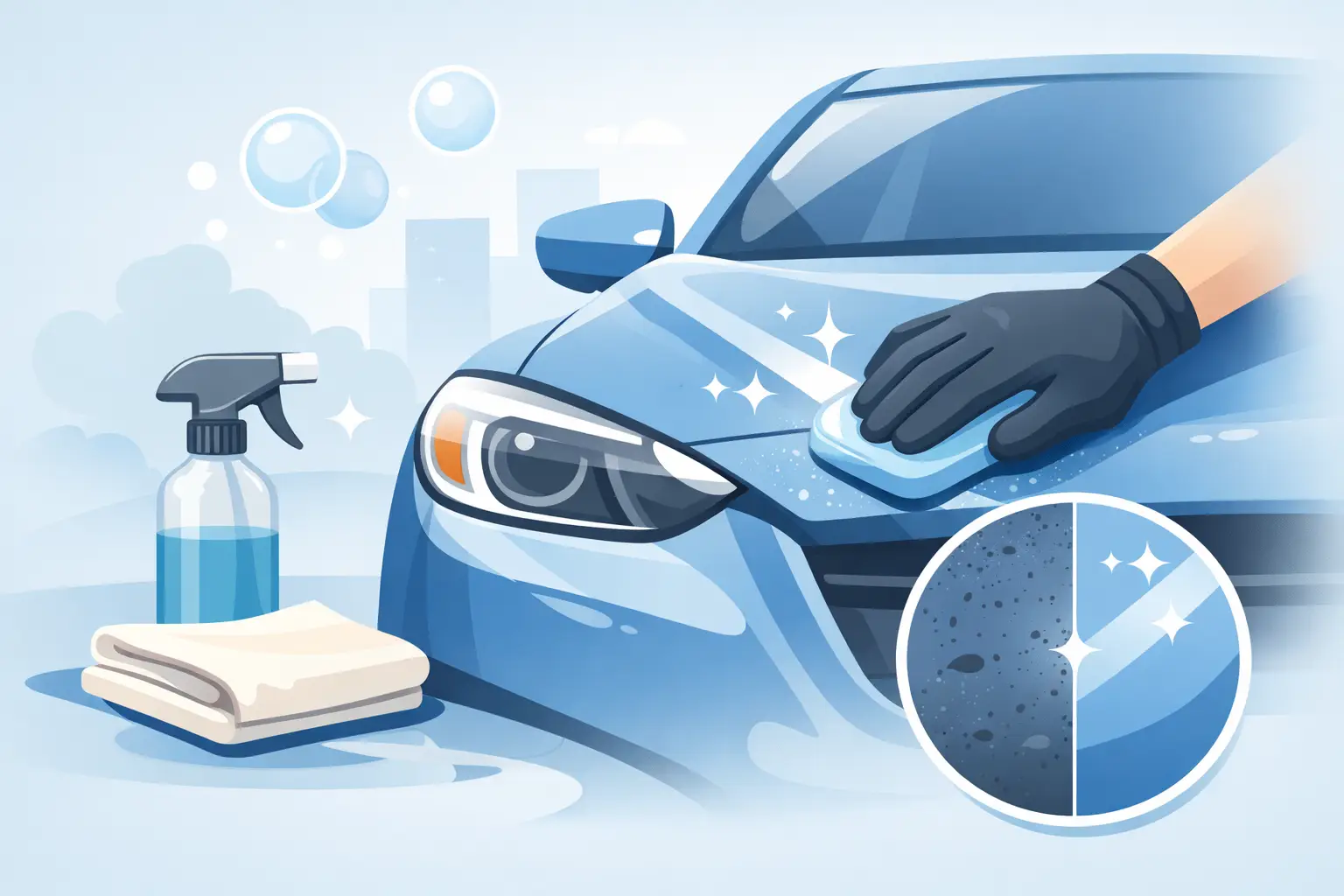
A clay bar treatment is a paint decontamination step. The clay glides over a properly lubricated surface and pulls embedded contaminants off the paint, glass, and sometimes smooth trim. It does not replace washing, and it does not correct scratches like polishing does. Its job is to remove what washing leaves behind.
That difference matters. If contamination stays on the paint, it can block protection products from bonding evenly and leave the finish looking dull or feeling rough. If you polish contaminated paint, you also risk dragging those particles across the surface, which can create marring. Clay first, then polish or protect if needed, is usually the safer order.
For most vehicles, the result is easy to notice right away. The paint feels slicker, reflections look cleaner, and drying becomes easier because the surface is no longer fighting through stuck-on debris. On lighter-colored vehicles, the improvement can be subtle visually but obvious by touch. On darker paint, the jump in clarity is often more dramatic.
Signs your vehicle needs a clay bar treatment
The clearest sign is texture. After washing and drying, the paint should feel smooth. If it feels sandy, grabby, or uneven, contamination is likely present. Another clue is weak shine even after a fresh wash. When the surface is loaded with bonded fallout, it can scatter light and make the paint look tired.
You may also notice small rust-colored specks, especially on light paint. Those are often iron particles from brake dust or industrial fallout. They embed into the surface and can become more noticeable over time. Glass can show the same problem. If your windshield feels rough or your wipers chatter even after cleaning, contamination may be part of the issue.
There is also a timing factor. If it has been months since the vehicle had any real paint decontamination, and it spends its life outside, near construction, on highways, or under trees, there is a good chance clay is due. Daily drivers, work trucks, and family vehicles usually need it more often than garage-kept weekend cars.
Why Arizona vehicles usually need it sooner
Paint contamination is not just a cold-weather or industrial-city problem. In the East Valley, vehicles deal with dust, blown debris, intense UV exposure, and hard water spotting. Even if your paint looks clean from ten feet away, the surface can still be loaded with bonded material.
Hard water is a big one. Mineral deposits can cling to the surface and create a rough feel, especially if sprinklers hit the vehicle or it is washed in direct sun and dries too quickly. Road grime also bakes onto the finish faster in heat. The longer contaminants sit, the harder they are to remove safely.
That is why clay bar service is often part of smart maintenance, not just occasional restoration. Waiting until the finish feels terrible usually means more labor, more aggressive correction, and a higher chance that the paint already has etching or staining that clay alone cannot fix.
What clay can remove and what it cannot
Clay works well on bonded surface contamination. That includes rail dust, industrial fallout, overspray, bug residue leftovers, light sap mist, road film, and some mineral buildup. It can also make glass feel dramatically cleaner by removing the grit that regular washing leaves behind.
But clay has limits. It will not remove scratches, oxidation, or swirl marks. It will not fix etched water spots that have already eaten into the clear coat. It also will not replace compounding or polishing when the paint has lost clarity from actual damage.
This is where honest service matters. Not every rough panel needs a multi-step correction, and not every dull finish is solved by clay. Sometimes clay is exactly the missing step. Other times the paint needs decontamination plus polishing for the full result. It depends on the condition of the vehicle, how long the contamination has been sitting, and what kind of finish you want afterward.
Clay bar treatment for cars and paint protection
One of the biggest benefits of claying is what happens next. Protection products work best on a properly cleaned surface. If you apply wax, sealant, ceramic spray, or a coating over bonded contamination, you are not getting the best bond or the best finish.
A decontaminated surface gives protection a better chance to spread evenly and last longer. It also improves the look of the final result. Gloss is not just about what product goes on top. It starts with how clean and smooth the paint is underneath.
That is why clay is often paired with polishing or protection rather than sold as a random add-on. When done at the right time, it prepares the vehicle for better long-term results. For drivers who care about keeping their paint easier to wash and less prone to buildup, this step pays off.
Is a clay bar treatment safe?
Yes, when it is done correctly. The key is proper lubrication, a clean process, and realistic pressure. Clay should glide across the surface, not scrub it. If the paint is dirty to begin with or the technician rushes the process, marring can happen, especially on softer dark paint.
That is another reason professional service has value. The process is simple in theory but easy to get wrong in practice. Different vehicles, paint conditions, and contamination levels call for different approaches. Some surfaces need a gentler clay media. Others need chemical decontamination first to reduce the amount of physical contact required.
A good detailer is not just trying to make the paint feel smooth for the moment. The goal is to remove contamination safely and set the surface up for whatever comes next.
How often should you clay a vehicle?
There is no single schedule that fits every car. A daily-driven truck parked outside will need more frequent decontamination than a garage-kept sedan. In general, once or twice a year is common for vehicles that are maintained well, with more frequent service for vehicles exposed to harsher conditions.
The better way to judge it is by condition, not a calendar reminder. If the paint feels rough after washing, if protection is no longer performing evenly, or if the surface looks dull despite being clean, it may be time. Overdoing clay is not helpful either. Since it is a contact process, it should be done when needed, not out of habit.
What to expect after the service
Right after claying, most vehicles feel noticeably smoother. The paint usually looks cleaner and brighter, and drying towels glide more easily across the surface. If protection is applied afterward, water behavior and gloss usually improve even more.
If the paint has existing swirl marks or oxidation, those flaws may stand out more once the contamination is gone. That does not mean clay caused the damage. It means the surface is now cleaner, so the true condition is easier to see. In those cases, a paint enhancement polish may be the next smart step.
For drivers who want results without the hassle, this is one of those services that makes everyday ownership easier. A smoother, cleaner surface holds onto less grime, looks better between washes, and gives your protection a fair shot at lasting. That matters whether you drive a commuter car, a family SUV, a truck, or something you take real pride in keeping sharp.
At LJS Elite Mobile Detailing, the value of a clay service is simple: remove what should not be on your paint, protect what should. If your vehicle still feels rough after a wash, that is your paint asking for more than soap.
Comments