
Hard Water Spot Removal Car Tips That Work

Updated: Sep 29
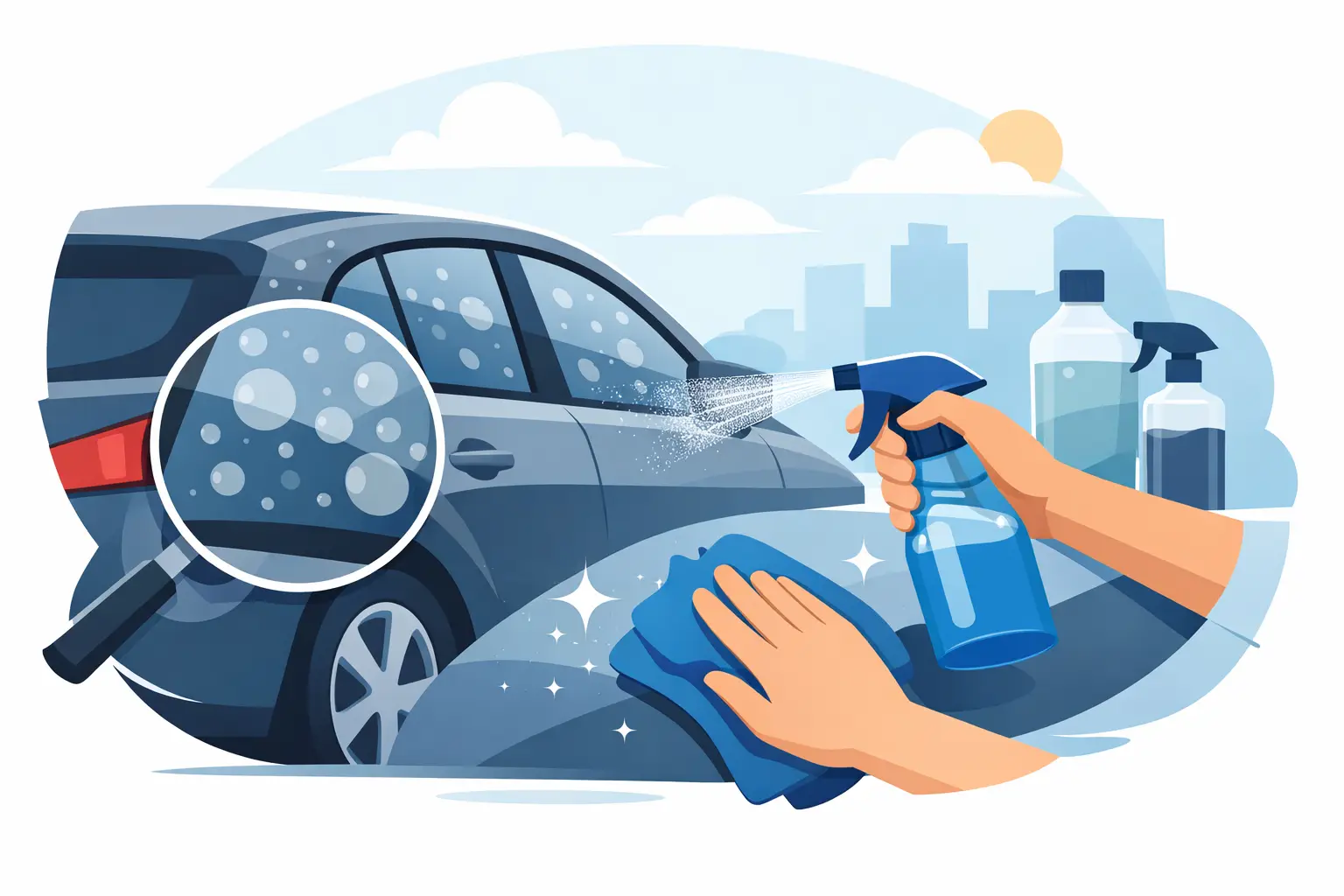
You wash your car, step back, and instead of a clean finish, you see chalky rings baked onto the paint and glass. That is the frustration behind hard water spot removal car problems, especially in Arizona where mineral-heavy water and intense sun team up to make spots set fast.
The tricky part is that not all water spots are the same. Some sit on top of the surface and come off with the right cleaner. Others etch into clear coat or stain glass if they have been left too long. If you treat every spot the same way, you can waste time at best and scratch the finish at worst.
Why hard water spots get so stubborn
Hard water spots come from minerals, mainly calcium and magnesium, left behind after water evaporates. On a vehicle, that usually happens after sprinklers hit the paint, a wash dries in the sun, or mineral-rich water is allowed to sit on glass, trim, and wheels.
Heat makes the problem worse. In a hot climate, water evaporates quickly, but the minerals stay behind and bond to the surface. If that happens over and over, the spots become more than a cosmetic issue. They can start to etch into paint, especially dark colors, and they can leave rough, cloudy patches on glass that make the whole vehicle look neglected even when it is otherwise clean.
Hard water spot removal car owners should start here
Before reaching for a strong product, figure out what kind of spotting you are dealing with. If the surface still feels smooth and the marks look like white or cloudy outlines, there is a good chance they are mineral deposits sitting on top. If the finish feels rough or the spot remains visible even after washing, you may be dealing with bonded contamination or etching.
Start with the least aggressive method first. Wash the vehicle thoroughly in the shade using a pH-balanced soap. A proper wash removes loose dirt so you are not rubbing grit into the paint while trying to treat the spots. Dry the car fully and inspect it in good light. This matters because some spots vanish when wet and reappear once the surface is dry.
If the spots remain, use a dedicated water spot remover or a mild acidic cleaner made for automotive surfaces. Apply it to a microfiber towel or applicator, not a dry abrasive pad, and work one small section at a time. Let the product do the work. Rubbing harder is usually not the answer.
When a simple cleaner is enough
Fresh spots on glass, paint, and chrome often respond well to a proper spot remover. The key is timing. If the spots formed recently, they usually have not had enough time to etch into the surface. In those cases, a chemical treatment followed by a gentle wipe and rinse can restore clarity without additional correction.
This is also where many DIY jobs go sideways. People jump straight to vinegar, household cleaners, or rough scrubbing pads. Vinegar can help in some cases, but it is inconsistent, and household products are not always safe for automotive finishes, trim, or coated surfaces. Saving a few dollars is not worth dulling paint or staining delicate materials.
When claying may help
If the paint still feels rough after chemical treatment, a clay bar or synthetic clay mitt may help remove bonded contamination that is trapping the minerals against the surface. This step requires lubricant and a light touch. Clay is not meant to grind off defects. It is there to lift contamination from the surface.
Claying can improve the finish, but it also has trade-offs. On softer paint, it may leave slight marring that needs polishing afterward. That is why it works best as part of a correction process rather than a one-step fix for every vehicle.
When hard water spot removal on a car needs polishing
Once minerals etch into the clear coat, cleaners alone usually will not solve the problem. At that point, polishing is often the answer. A light machine polish can remove or reduce etching by leveling the affected area and restoring gloss.
This is where experience matters. Too little correction leaves the spots behind. Too much correction removes unnecessary clear coat. A professional detailer will usually test a small area first, then choose the least aggressive polish and pad combination that gets the result. That approach protects the finish while still improving the appearance.
Glass can be even more stubborn. Some water spots on windows come off easily with the right glass-safe mineral remover. Others require machine polishing with a glass polish. Deep etching may improve, but not disappear completely. That is one of those it-depends situations no honest detailer should gloss over.
The biggest mistakes people make
The most common mistake is trying to remove water spots in direct sun. Products dry too quickly, surfaces get hot, and the chances of streaking or damage go up. Another mistake is using harsh tools like magic erasers, kitchen scrub pads, or razor blades on paint and tinted glass. They may seem effective for a minute, but they can leave behind scratches that are harder to fix than the water spots.
The other issue is waiting too long. Hard water spots are easier to deal with when they are fresh. Once the minerals have baked in for weeks or months, removal becomes more labor-intensive and may require paint correction. That means more time, more cost, and in severe cases, less than perfect recovery.
Protecting the finish after spot removal
Removing the spots is only half the job. If you do not protect the surface afterward, the same problem can return quickly.
A quality paint sealant, ceramic spray protection, or ceramic coating creates a sacrificial layer that helps reduce how aggressively minerals bond to the paint. It does not make your car immune to water spots, but it does make future cleanup easier and lowers the odds of severe etching. The same logic applies to glass protection. Treated glass sheds water better and is easier to maintain.
For drivers dealing with sprinklers at home or hard water at work, protection matters even more. A protected surface gives you a better chance of wiping away fresh spotting before it becomes permanent. It is not hype. It is practical maintenance.
Why Arizona drivers deal with this more often
In the East Valley, hard water and heat are a rough combination for vehicle surfaces. If a sprinkler catches your truck overnight or you wash your car in the driveway and let it air dry, those minerals can set by morning. Add full sun, hot panels, and dust, and the finish takes a beating fast.
That is why mobile detailing makes sense for a lot of owners here. Getting spot removal, decontamination, polishing, and protection done at your home or office is not just convenient. It also makes it easier to stay ahead of damage before it turns into permanent staining. For busy families, professionals, truck owners, and RV owners, that time savings is a real benefit.
When to call a professional
If the spots have been there for a while, if they cover multiple surfaces, or if you are dealing with etched paint or cloudy glass, professional service is usually the smarter move. The right process may include a wash, decontamination, chemical spot treatment, clay treatment, polishing, and surface protection. Not every vehicle needs all of that, but a proper inspection tells you what is worth doing and what is not.
A good detailer should be direct about the outcome. Some spots will come out completely. Some etched defects may only improve. That kind of honesty matters. At LJS Elite Mobile Detailing, the goal is visible results without hassle, not a sales pitch loaded with add-ons you did not ask for.
If you want to avoid the problem going forward, a simple habit helps more than most people realize. Dry the vehicle quickly after washing, keep it away from sprinklers when possible, and do not let mineral-rich water bake on the surface. Prevention is never as exciting as correction, but it is a lot cheaper.
Hard water spots have a way of making a well-kept vehicle look tired before its time. The good news is that many of them can be removed, and even better, most can be managed with the right care before they turn into lasting damage.
Comments