
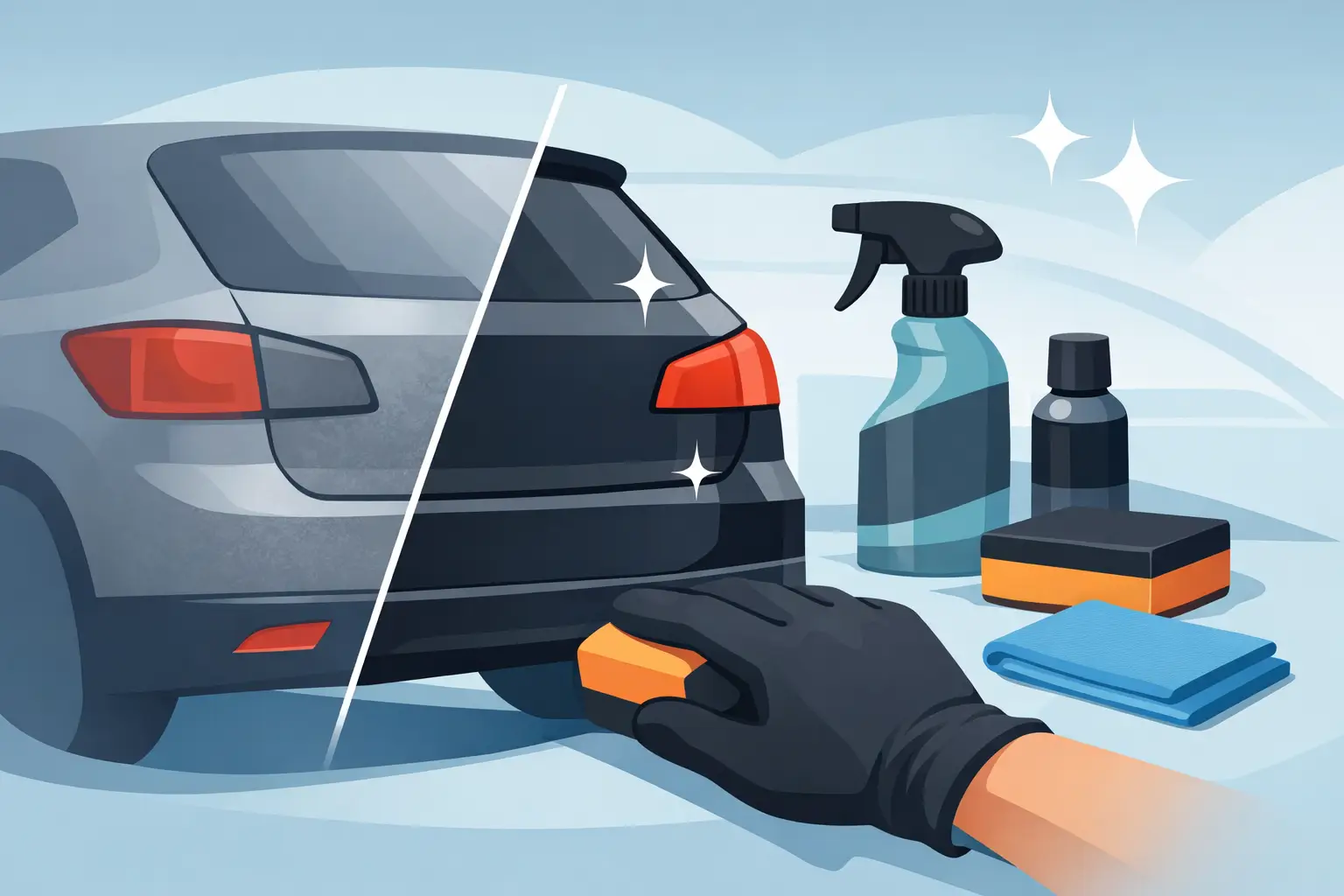
Trim Restoration for Faded Plastic That Lasts

Updated: Sep 29
That chalky gray trim around your wheel wells, mirrors, cowl, and bumpers does more than make a vehicle look older. It drags down the whole appearance, even when the paint is clean. Trim restoration for faded plastic is one of the fastest ways to make a vehicle look cared for again, especially in Arizona where sun and heat do their worst every day.
Faded trim is easy to ignore at first. Then one day you notice the contrast. The paint still has some gloss, the glass looks clean, the tires are dressed, and the plastic trim looks dry and washed out. On trucks, SUVs, crossovers, and RVs, that difference stands out even more because there is simply more exterior plastic to look at.
Why plastic trim fades so badly
Exterior plastic trim takes a beating. UV exposure breaks down the surface over time, heat dries it out, and repeated washing can strip away what little protection remains. In Arizona, you also have dust, hard water, and long stretches of direct sun that speed everything up.
A lot of factory trim starts deep black or charcoal, but that finish does not stay that way on its own. As the surface oxidizes, it turns dull, gray, and uneven. Some parts fade evenly. Others get patchy, especially on textured bumper trim and mirror housings. That is why a vehicle can look half-restored after a basic wash. The paint improves, but the trim still looks tired.
What trim restoration for faded plastic actually does
A real restoration is not the same as wiping on a greasy dressing and calling it done. Good trim restoration for faded plastic starts with cleaning the surface properly so old residue, chalky oxidation, and embedded grime are removed. Then the trim is treated with a product designed to restore color and add protection.
The goal is simple - bring back a darker, richer finish without making the trim look fake or overly shiny. On a well-executed job, the trim should look clean, even, and close to its original appearance. It should also have some protection against the same sun damage that caused the fading in the first place.
That said, there is a limit to what restoration can do. If plastic has severe deterioration, deep staining, or physical damage, results may improve dramatically without looking brand new. Honest service means saying that upfront. Some trim comes back strong. Some improves a lot but still shows its age.
The difference between temporary shine and actual results
One reason people get frustrated with trim products is that many off-the-shelf options look good for a few days, then fade right back out. Some even wash away after the first rain or leave streaks after a sprinkler hit. Others sling onto paint or attract dust because they stay oily.
That is the trade-off with quick dressings. They are fast and inexpensive, but the result is usually cosmetic and short-lived. For someone trying to freshen up a vehicle before a weekend event, that might be enough. For anyone who wants their vehicle to stay presentable through regular driving, heat, and repeated washes, it usually is not.
Professional restoration products and methods tend to last longer because surface prep is better and the protection is more intentional. The trim is not just darkened. It is cleaned, corrected as much as possible, and treated with something meant to hold up better.
Where faded trim hurts appearance the most
Some vehicles hide faded trim better than others. Black plastic on black paint can blend in from a distance. On lighter paint colors, faded trim stands out immediately. White, silver, tan, and red vehicles often show the contrast the most.
The biggest problem areas are usually front bumper trim, cowl panels below the windshield, side mirror bases, bed rail caps on trucks, fender flares, roof rack components, and rear bumper step pads. These areas catch direct sun and often have textured surfaces that trap dust and oxidation.
When those pieces are restored, the whole vehicle looks sharper. It is one of those services that makes people think the paint looks better too, even if the trim was the main issue. Clean lines and darker accents give the exterior more definition.
Why Arizona vehicles need more than a quick fix
In milder climates, faded trim can take years to become obvious. In Arizona, that timeline can shrink fast. Vehicles parked outside at home or at work deal with nonstop UV exposure, high surface temperatures, and dry conditions that pull moisture out of plastic. Add hard water spotting and routine washing, and trim degradation becomes a regular problem, not a rare one.
This is why protection matters just as much as appearance. Restoring trim without adding some level of defense is like cleaning glass and leaving it exposed to the same sprinkler pattern every day. The better approach is to restore the finish and help it resist future fading.
For busy drivers, this also comes down to convenience. If your vehicle lives outdoors and you do not have time to test a shelf full of products, professional service saves trial and error. You get visible improvement without spending weekends reapplying dressings that do not last.
When professional trim restoration makes the most sense
If the trim is mildly faded, you may be able to improve it yourself. But there are situations where professional work is the better call. One is when the trim has uneven fading and past product buildup. Another is when the vehicle has a lot of textured plastic and you want a uniform result.
It also makes sense when the vehicle already needs exterior detailing. Trim restoration pairs well with washing, decontamination, paint enhancement, and protection because each service improves a different part of the same visual problem. Clean paint next to restored trim looks complete. Clean paint next to gray, dry trim still looks unfinished.
For larger vehicles like trucks, duallies, SUVs, boats, and RVs, mobile service can be especially valuable. The size of the job makes DIY less appealing, and many owners would rather have the work handled at home or the office than carve out half a day to drop off a vehicle somewhere.
What to expect from the service
A good service should be straightforward. The trim is inspected, cleaned thoroughly, and treated based on its condition. Some pieces may respond quickly. Others need extra prep because oxidation is heavier or old silicone dressings have to be removed first.
Results should look natural, not greasy. The trim should be darker and more even, with less of that dry gray cast that makes exterior plastic look neglected. Depending on the product used, the finish may be matte or satin. Either can look right. It depends on the trim style and the vehicle.
Durability also depends on exposure. A garage-kept vehicle will usually hold results longer than one parked outside full-time. Frequent automatic washes can shorten product life too. That is not a reason to skip restoration. It just means maintenance matters.
How to keep restored trim looking better longer
Once the trim has been restored, simple care goes a long way. Wash it with quality products that do not strip protection, avoid harsh degreasers unless they are truly needed, and dry the vehicle well if you are dealing with hard water. If sprinklers hit the vehicle regularly, changing where you park helps more than most people realize.
Periodic maintenance is also part of the equation. Exterior plastics are not one-and-done in extreme sun. They need occasional attention, just like paint, glass, tires, and wheels. That is why restoration works best as part of an overall appearance and protection plan, not as a last-minute fix once everything has dried out.
At LJS Elite Mobile Detailing, that practical approach matters. Customers want visible results, but they also want service that makes sense, shows up on time, and does not turn into a pile of add-ons. If your trim is faded, restoring it can make the vehicle look newer, cleaner, and better protected without the hassle of chasing temporary fixes.
If your vehicle still looks older than it should after a wash, the trim may be the reason. Sometimes the biggest improvement is not repainting, replacing, or overcomplicating anything. It is giving the details that frame the whole vehicle the attention they have been missing.
Comments