
Pet Hair Removal Car Interior Tips That Work

Updated: Sep 29
If you have a dog that rides shotgun, a backseat that doubles as a pet zone, or cargo space that sees daily fur storms, you already know pet hair removal car interior work is never as simple as a quick vacuum. Hair weaves itself into carpet fibers, clings to seat fabric, hides along trim edges, and somehow reappears right after you think the job is done. The good news is that there are methods that work. The trick is using the right approach for the material, the amount of hair, and how much time you actually want to spend on it.
Why pet hair is so hard to remove from a car interior
Pet hair is stubborn for a reason. In a vehicle, you are dealing with tight spaces, static, textured surfaces, and fabrics that grab onto fine strands. Cloth seats and trunk liners are usually the worst because the fibers hold hair deep below the surface. Floor mats trap it even more once it gets pressed in by shoes, paws, and daily traffic.
Leather and vinyl are easier to maintain, but they are not immune. Hair often collects in seams, under seat rails, and around center consoles where a standard vacuum nozzle cannot pull everything out on the first pass. Add Arizona dust into the mix, and hair can cling even harder as debris builds up around it.
That is why people often feel like they vacuumed thoroughly and still see fur stuck everywhere in direct sunlight. It is not laziness. It is the material.
The best pet hair removal car interior methods
The most effective process usually combines agitation and suction. Vacuuming alone helps with loose hair, but it rarely handles embedded fur. You need something that lifts the hair first so the vacuum can actually grab it.
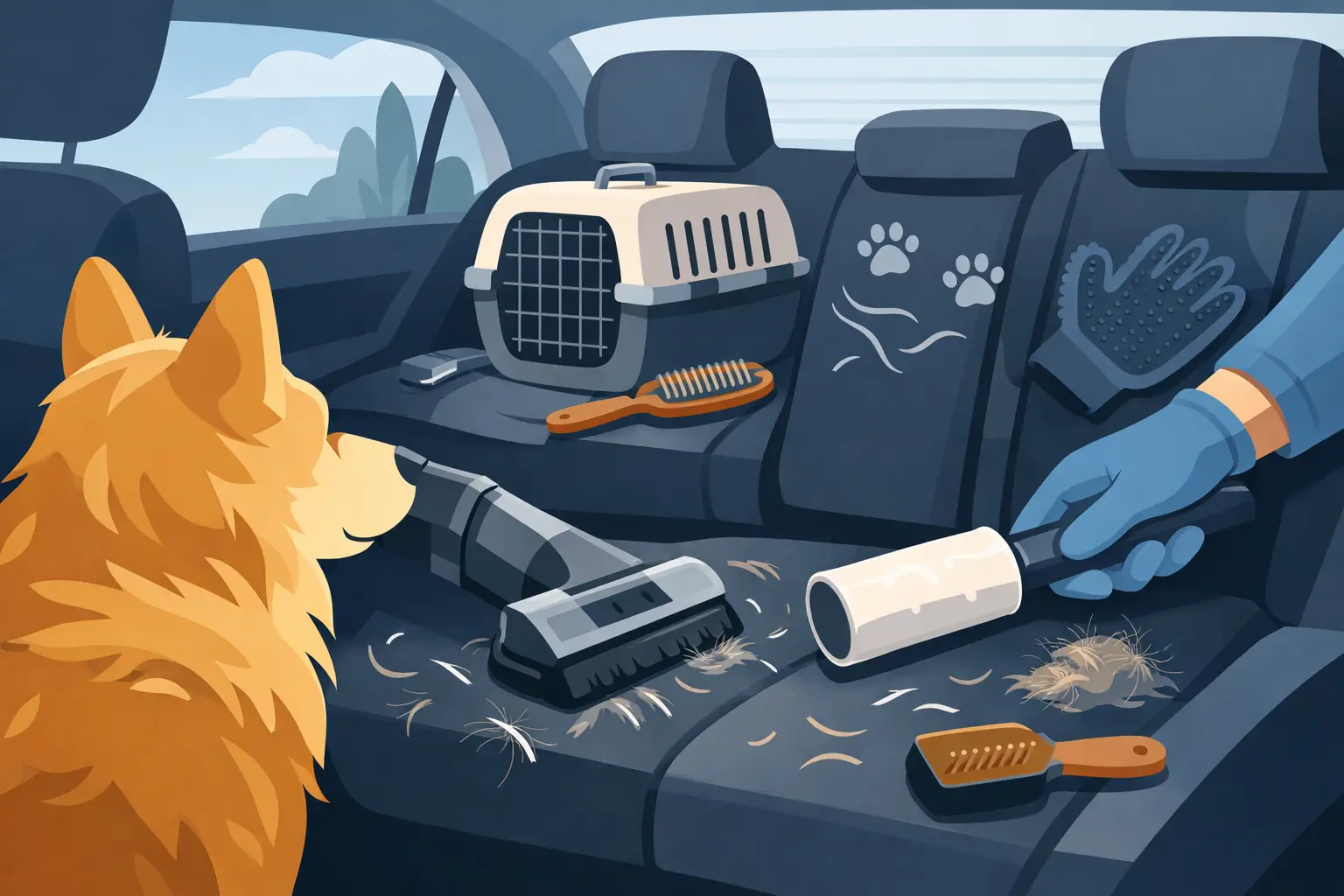
A rubber brush is one of the most reliable tools for cloth seats, carpet, and mats. Short, firm strokes create friction that gathers hair into visible clumps. Once it bunches up, vacuuming becomes much easier. This works especially well for medium and heavy shedding dogs.
A pumice-style pet hair stone can also work on carpeted areas, but it takes a light touch. Used correctly, it pulls out deeply stuck hair fast. Used too aggressively, it can be rough on delicate fabrics. That makes it better for heavy-duty floor carpet than for soft seat upholstery.
Rubber gloves are a low-cost option that still get results. Slightly dampen the glove and run your hand across fabric surfaces. Hair will collect into strips or balls you can pick up by hand or vacuum away. It is not the fastest method for a full interior, but it is useful for spot cleaning or maintenance between deeper details.
Compressed air can help in the cracks and edges where hair gets trapped. It is especially useful around seat tracks, under seats, and near trim panels. On its own, it just moves the mess around. Paired with a vacuum, it becomes much more effective.
What usually wastes time
Lint rollers are fine for clothing and the occasional seat touch-up, but they are not the answer for a heavily used pet vehicle. You will burn through sheets quickly and still leave behind the deeply embedded hair. They are better for light surface cleanup than full interior recovery.
Standard household vacuums can also be frustrating. Many do not have the suction, attachments, or reach needed for vehicle interiors. If the tool cannot get into corners or pull from dense carpet, you end up doing the same area over and over.
Fabric softener sprays are often recommended online, but they are a mixed bag. Some people use a very diluted solution to reduce static and loosen hair. It can help, but overdoing it can leave residue behind or create a smell you do not want in a closed cabin. If you try it at all, use very little and test it first.
Cloth seats vs. leather seats
The interior material changes the game. Cloth seats are the biggest challenge because pet hair embeds below the visible surface. You usually need brushing, multiple vacuum passes, and detail work around seams. If your dog rides often and your vehicle has cloth, routine maintenance matters more than waiting until the hair buildup gets extreme.
Leather, vinyl, and coated surfaces are much easier to manage day to day. Hair tends to sit on top instead of burying itself. The issue is that it migrates into creases, seat edges, and the space between the seat and console. That means less scrubbing, but more precision.
If you are buying a vehicle and pets are part of your daily routine, interior material is worth thinking about before you sign. A good seat cover can help either way, but factory cloth paired with a shedding dog will always mean more upkeep.
How to remove pet hair without damaging the interior
This is where people can create more problems than they solve. Aggressive scraping on upholstery can fray fibers. Harsh brushes can leave wear marks. Overwetting fabric can trap moisture below the surface, especially in seat cushions and carpet padding.
The safer approach is controlled friction, not brute force. Work in sections. Use a dedicated pet hair brush, glove, or interior-safe rubber tool. Vacuum as you go instead of waiting until the end. That keeps loosened hair from settling back into another area.
Delicate trim, gloss black surfaces, and infotainment screens should be treated separately. Pet hair often collects around them, but the tool you use on carpet should not be dragged across sensitive materials. A clean microfiber towel and the right interior process matter there.
When DIY works and when it does not
If the hair is light and you stay on top of it weekly, a simple routine can be enough. A handheld vacuum, rubber brush, and a few minutes after a park trip or vet run can keep things manageable. For newer buildup, that is usually the most cost-effective option.
If the hair has been building for months, the interior has multiple fabric surfaces, or the fur is packed into every seam and mat, DIY gets much less efficient. You can still do it yourself, but expect it to take longer than you think. What looks like a 30-minute cleanup can turn into half a day.
That is usually the tipping point where professional detailing makes more sense. A proper pet hair service is not just about vacuuming harder. It is about using the right tools, enough repetition, and enough attention to detail to get visible improvement across the entire cabin.
For busy families and professionals, convenience matters too. If your schedule is packed, spending a Saturday fighting dog hair out of seat fabric may not be the best use of your time. That is one reason mobile service is such a practical fit. LJS Elite Mobile Detailing handles this kind of interior work on-site, so the vehicle gets attention where you already are, without the extra trip or the usual shop wait.
How to keep pet hair from taking over again
Prevention is never perfect, but it makes a big difference. A fitted seat cover or cargo liner cuts down the amount of hair reaching the original material. Regular brushing of your pet before rides also helps more than most people expect, especially during shedding season.
A quick vacuum once a week is better than a major cleanup once every two months. Hair that sits gets worked deeper into fabric and becomes harder to remove. If you transport pets often, small maintenance habits save time later.
It also helps to keep a towel or blanket in the car for short trips. It may not look perfect, but it creates a removable barrier between your pet and the upholstery. For many owners, that one simple step does more than any gadget bought online.
Is professional pet hair removal worth it?
It depends on the condition of the interior and how much you value your time. If your car has light shedding and smooth surfaces, maybe not every time. If you have cloth seats, a heavy shedder, kids in the back, and a vehicle that needs to stay presentable for work or daily life, professional help can be well worth it.
The real value is not just hair removal. It is restoring the interior so it looks and feels under control again. That includes getting into the problem areas most people miss, reducing the lingering debris that comes with pet transport, and making regular upkeep easier after the reset.
A clean interior also tends to stay cleaner when the first deep service is done properly. Once the embedded layer is gone, weekly maintenance becomes realistic instead of frustrating.
Pet-friendly vehicles do not have to look defeated. With the right tools, the right process, and realistic expectations, you can get ahead of the fur and keep your interior looking a lot better than most people think is possible.
Comments