
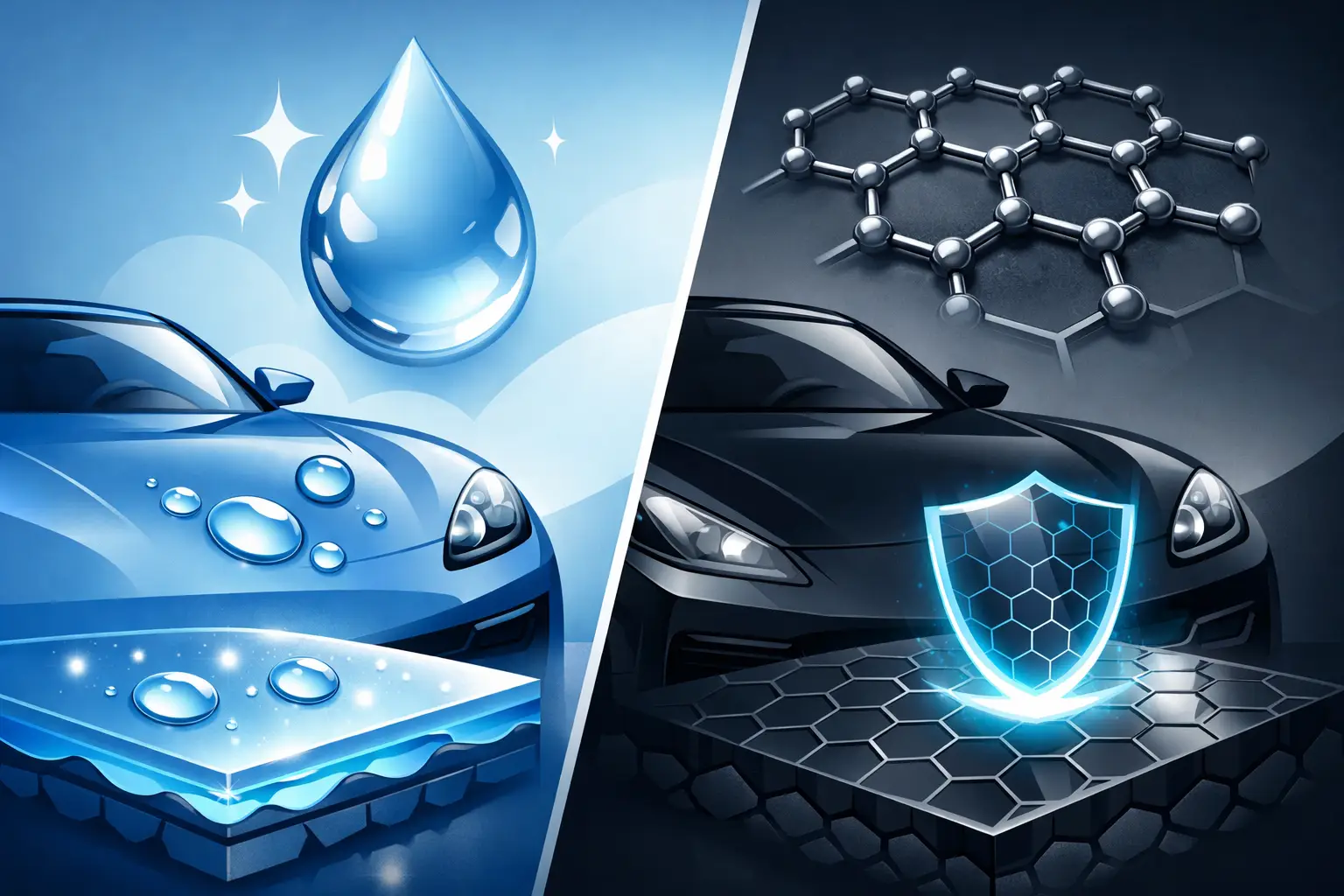
Ceramic Coating vs Graphene: Which Wins?
Updated: Sep 29
If your vehicle lives in Arizona, this is not a small decision. Between brutal sun, dust, hard water, and heat coming off the pavement, the question of ceramic coating vs graphene matters a lot more here than it does in milder climates. The right coating can make washing easier, help reduce staining, and keep your paint looking sharper longer. The wrong choice is usually not a disaster, but it can mean paying for features you do not really need.
For most drivers, the real answer is not about hype. It comes down to your vehicle, how you use it, where it sits during the day, and how well you plan to maintain it after the coating goes on. That is where the difference between ceramic and graphene starts to make sense.
Ceramic Coating vs Graphene: What are you actually buying?
Both options are paint protection coatings designed to bond to the surface of your vehicle and create a more durable layer than a wax or spray sealant. They are not bulletproof. They do not make your paint scratch-proof, and they do not stop rock chips. What they do well is add chemical resistance, improve water behavior, boost gloss, and make the vehicle easier to clean.
Ceramic coatings have been the standard for years. They are widely tested, well understood, and available in different grades depending on longevity and performance. A quality ceramic coating can provide strong shine, solid hydrophobic behavior, and dependable long-term protection when the prep work is done correctly.
Graphene coatings are newer and often marketed as the next step forward. In simple terms, they are typically coating formulas that incorporate graphene-related materials to improve certain performance traits. Depending on the brand and formula, that can mean better slickness, different heat behavior, or a reduced tendency for water spotting. The key phrase there is depending on the formula. Not every graphene product performs the same, and not every one outperforms a proven ceramic coating.
Where ceramic coatings still have the edge
Ceramic remains the safer choice if you want something time-tested. There is a reason so many professional detailers still rely on it. Good ceramic coatings have a long track record, and when installed properly, they offer the kind of consistent protection most drivers are looking for.
Gloss is one of ceramic's biggest strengths. If you want that deep, freshly polished look that makes dark paint pop and lighter colors look crisp and clean, ceramic usually delivers. It also creates a surface that sheds grime more easily than unprotected paint, which is a big advantage when your vehicle deals with desert dust, pollen, and road film every week.
Ceramic also makes sense for owners who want reliable value. Because there are more established products on the market, it is easier for a professional to match the coating to your budget, paint condition, and maintenance goals. That matters if you care less about buzzwords and more about getting a clear result for your money.
Where graphene may offer an advantage
Graphene gets attention for a few reasons, and some of them are legitimate. One of the biggest claims is improved resistance to water spotting. In Arizona, that is not a minor feature. Hard water can leave behind mineral deposits fast, especially if a vehicle is parked outside or gets hit by sprinklers. Any coating can still get water spots, but some graphene formulas are designed to reduce how strongly minerals bond to the surface.
Another reason people look at graphene is heat. In a state where paint, trim, and glass are under constant heat load, even small performance gains matter. Some graphene coatings are marketed as better at handling surface heat or reducing heat retention. The practical benefit is not that your hood will suddenly feel cool in July. It is more about how the coating behaves over time under extreme conditions.
Graphene coatings can also feel slicker to the touch, which some owners prefer. That slickness can help with cleaning and drying, and it can add to the premium feel after a detail. The catch is that slickness alone should not decide your purchase. A coating can feel great on day one and still underperform long term if the chemistry or installation is not right.
Ceramic coating vs graphene in Arizona conditions
This is where the comparison gets real. In Arizona, the biggest enemies are UV exposure, hard water, oxidation, dust, and neglected maintenance. Both ceramic and graphene can help, but neither one replaces regular care.
If your car sits outside at home and at work, water spotting should be high on your priority list. If you live in an area with irrigation overspray or wash your vehicle in direct sun, graphene may be worth a serious look. If your main goal is proven long-term gloss, easier washing, and dependable all-around paint protection, ceramic is still a strong answer.
For trucks, SUVs, RVs, and boats, the decision can lean on usage more than chemistry. Larger vehicles are harder to wash frequently and more likely to collect stubborn buildup. In those cases, the best coating is often the one that gives you the easiest maintenance routine afterward. That means professional prep, good application, and realistic aftercare recommendations matter more than marketing claims on the bottle.
The part most people miss: prep matters more than the label
This is where a lot of coating comparisons go sideways. People focus on ceramic versus graphene and skip over the part that actually decides the result. Surface preparation matters more than the branding.
If the paint is not properly washed, decontaminated, clayed when needed, and corrected before the coating is applied, the end result will never be as good as it should be. A coating locks in what is underneath it. That means swirl marks, oxidation, embedded contamination, and dullness do not disappear just because a premium product goes on top.
A professionally installed ceramic coating on well-prepped paint will almost always outperform a rushed graphene application on a poorly prepared surface. That is why transparent service matters. You want to know what is included, what level of correction is being done, and what kind of finish you can realistically expect. No upsell, just shine only works when the process is clear from the start.
Which one is better for daily drivers?
For most daily drivers, ceramic is still the practical favorite. It is proven, effective, and easier to evaluate because there is so much real-world experience behind it. If you commute, park outside sometimes, and want your vehicle to stay glossier and easier to clean, a quality ceramic coating is hard to argue with.
Graphene can be a smart option for owners who are especially concerned about water spotting or who simply want a newer coating formula that may fit Arizona conditions well. But it should be chosen for a real reason, not because it sounds more advanced. Newer does not always mean better for every car.
If your vehicle is already in strong condition and you want a premium protection package, either coating can work well. If the paint needs major correction first, your money may be better spent making sure the finish is properly restored before worrying about whether ceramic or graphene sounds more impressive.
How to choose without overcomplicating it
Start with how you use the vehicle. If it is a family SUV that gets driven daily, sees school pickup lines, grocery runs, and weekend road trips, go with the option that gives you reliable protection and simple upkeep. If it is a black truck that lives outdoors and constantly battles hard water spots, ask harder questions about the coating's water behavior and maintenance plan.
Then think about your expectations. If you want the vehicle to look better for longer and be easier to wash, both options can do that. If you expect a coating to prevent all damage, hide poor paint, or eliminate maintenance, neither one will meet that standard.
Finally, choose the installer as carefully as the coating. A dependable mobile detailer who explains the process, shows up on time, and applies the right product for your needs will give you a better outcome than someone pushing the latest trend with vague promises. At LJS Elite Mobile Detailing, that customer-first approach matters because protection should fit your vehicle and your schedule, not a sales script.
The best coating is the one that makes it easier to keep your vehicle looking sharp in real Arizona conditions. Pick the product that matches your paint, your parking situation, and your maintenance habits, and you will be a lot happier with the result six months from now than if you simply chased the newest name.
Comments