
Paint Decontamination Before Ceramic Coating
Updated: Sep 29
A ceramic coating can only bond to what is actually on the paint. If that surface is covered in embedded brake dust, industrial fallout, road film, tree sap mist, or stubborn mineral deposits, the coating is not bonding to clean clear coat - it is bonding to contamination. That is why paint decontamination before ceramic coating is not an optional extra. It is the step that separates a coating that looks great for a week from one that performs the way it should.
A lot of drivers hear "ceramic coating" and picture a magic shield that fixes everything. It does not work that way. A coating protects what is already there. If the paint is rough, neglected, or loaded with bonded contaminants, sealing that in only locks the problem under a premium layer of protection.
Why paint decontamination before ceramic coating matters
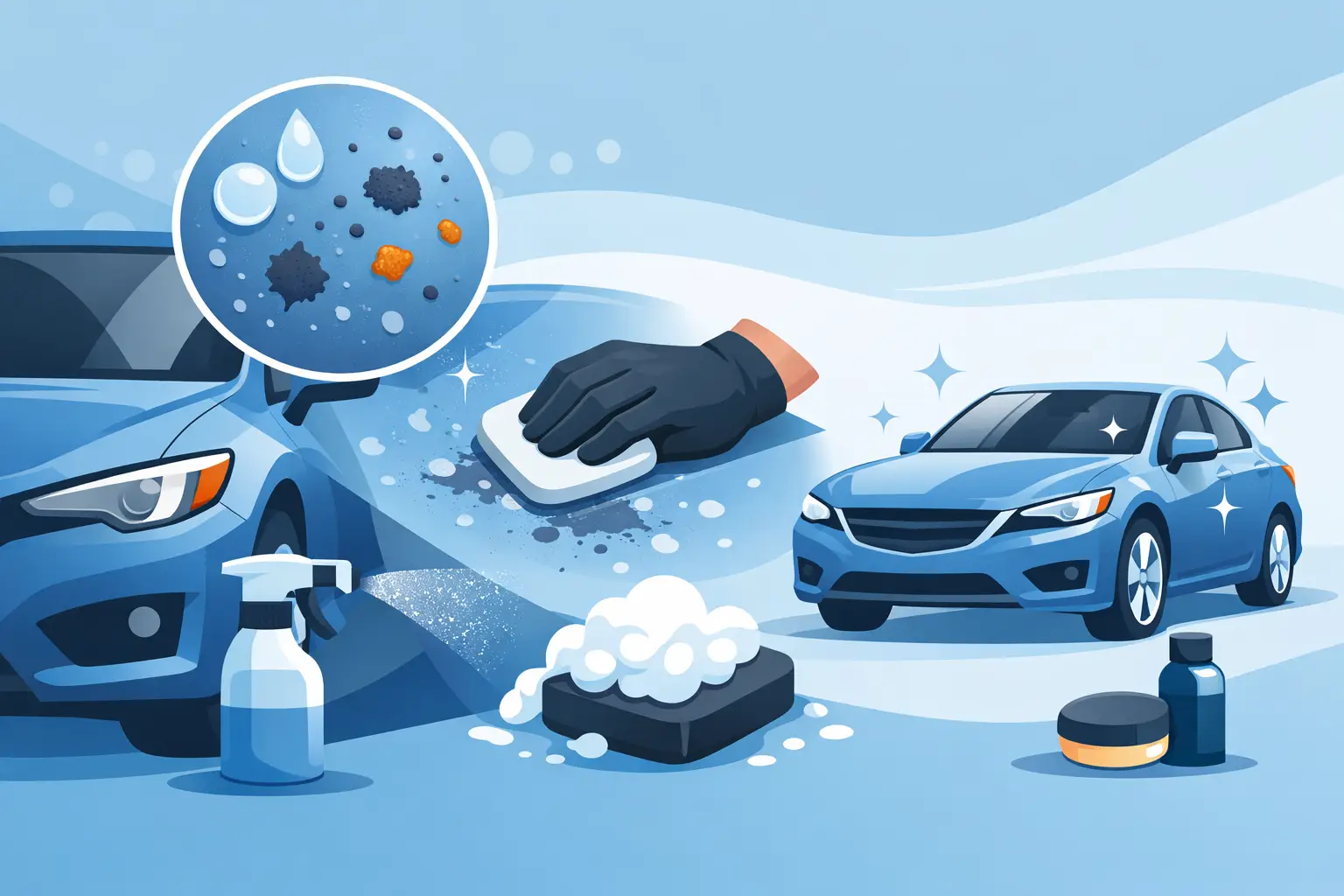
The main job of decontamination is simple - remove what regular washing leaves behind. Even vehicles that look clean can still have contaminants stuck in the paint. You may not see them right away, but you can usually feel them. Run your hand lightly over a freshly washed hood inside a thin plastic bag and you will often notice tiny bumps. That roughness is contamination sitting on or in the surface.
When those particles stay in place, they create a few problems. First, they interfere with bonding. Ceramic coatings need a properly cleaned and prepped surface to adhere well. Second, they reduce gloss and slickness. Third, some contaminants are corrosive. Iron particles and industrial fallout can slowly damage the finish if they are ignored long enough.
In Arizona, this matters even more. Sun exposure, hard water, dust, road grime, and baked-on residue all work against your paint. A vehicle parked outside in Gold Canyon, Mesa, or Queen Creek takes a different level of abuse than one kept in a climate-controlled garage all week. That is why prep work is never the place to cut corners.
What contamination is actually on your paint?
Most owners think contamination means mud or dirt. That is only the easy stuff. Regular washing removes loose debris. Decontamination targets the bonded material that stays behind after the wash.
That can include iron fallout from brakes and roads, tar, bug residue, overspray, hard water spotting, tree sap, road film, and environmental fallout. On lighter paint colors, some of this can be hard to spot. On darker vehicles, you may notice dullness or a gritty feel sooner. Trucks, daily drivers, and vehicles that spend a lot of time near construction zones or freeways tend to collect even more.
The challenge is that contamination is not always evenly spread. Lower doors, rear panels, and horizontal surfaces usually take the biggest hit. That means prep has to be thorough, not rushed.
How paint decontamination before ceramic coating is done
A proper process usually starts with a thorough wash. That removes loose dirt so the deeper cleaning stages can work without dragging grime across the finish. From there, chemical decontamination and mechanical decontamination may both be used, depending on the condition of the vehicle.
Chemical decontamination
Chemical decontamination uses dedicated products to dissolve specific contaminants. Iron removers target embedded metal particles. Tar removers break down sticky road residue. Water spot removers may be used when mineral buildup is present. The goal is to loosen or dissolve contamination without aggressive scrubbing.
This step matters because it reduces how much physical contact is needed later. Less unnecessary friction means less chance of adding marring to the paint.
Clay bar or clay treatment
After chemical decontamination, the paint may still need a clay bar or synthetic clay treatment. This is the mechanical side of the process. It glides across the lubricated surface and pulls out bonded contaminants that washing and chemicals did not fully remove.
Done correctly, clay treatment leaves the surface dramatically smoother. Done carelessly, it can leave marring behind, especially on softer or darker paint. That is one reason paint correction or polishing often follows decontamination before a ceramic coating is applied.
Polishing and surface prep
Decontamination removes contamination. It does not automatically remove swirl marks, scratches, oxidation, or haze. If the goal is a cleaner, glossier finish before coating, polishing may be the next step. Even a light paint enhancement can improve clarity and depth in a big way.
Then comes final surface prep. This usually involves removing polishing oils and residues so the coating is applied to a truly clean surface. Skipping this part can undermine bonding just as much as skipping decontamination.
Can you skip decontamination if the vehicle is new?
Sometimes people assume a new vehicle does not need much prep. That is not always true. New paint can still pick up rail dust, dealership wash marring, industrial fallout, water spots, and transport contamination before the owner ever takes delivery.
A newer vehicle may need less correction than an older one, but that does not mean it is ready for coating straight after a basic wash. In many cases, the paint still benefits from at least light decontamination and proper prep. The only honest answer is it depends on the vehicle's actual condition, not its age.
What happens if you coat over contamination?
The short answer is disappointment. You may still get some shine, but you are not getting the full value of the coating. Bonding can be compromised. The finish may feel rough instead of slick. Gloss can look muted. Water behavior may be less impressive. In some cases, contamination under the coating can continue affecting the paint underneath.
It also makes future correction more complicated. Once a coating is installed over a poorly prepared surface, fixing the issue usually means polishing the coating back off and starting over. That is more labor, more cost, and more frustration than doing the prep correctly the first time.
Why professional prep usually pays off
There is a reason professional coating services focus so heavily on prep. The visible result comes from the coating, but the lasting result comes from the preparation under it. If the vehicle needs iron removal, clay treatment, paint enhancement, and careful surface prep, that work is what makes the coating worth it.
For busy vehicle owners, convenience matters too. Having mobile service performed at your home or office means the vehicle can get the full prep and protection process without you spending half the day waiting around at a shop. That is a big part of why LJS Elite Mobile Detailing builds its services around on-site convenience and clear, no-surprise pricing. The goal is elite results without adding friction to your schedule.
How to know your paint needs decontamination
If the paint feels rough after a wash, that is the obvious clue. Dullness, poor water behavior, stuck-on specks, light orange staining from iron particles, and stubborn residue on lower panels can also point to contamination. Sometimes the signs are subtle until the vehicle is properly decontaminated and the difference becomes obvious.
The hardest part for many owners is that contamination can hide under a layer of wash gloss. A car may look decent in the shade but still be far from ready for ceramic protection. That is why inspection matters more than assumptions.
Ceramic coating is only as good as the surface under it
There is no shortcut around this. If you want a coating to last, look better, and protect more effectively, the paint has to be properly cleaned and prepared first. Paint decontamination before ceramic coating is not about selling an extra step. It is about making sure the coating has the right foundation.
For some vehicles, that means a straightforward decontamination and prep. For others, especially daily drivers exposed to Arizona sun, dust, and hard water, it may also mean polishing to bring the finish back before locking in protection. Either way, the right process depends on the condition of the paint, not a one-size-fits-all package.
If you are investing in ceramic protection, make sure the prep gets the same attention as the final layer. That is where the real value starts.
Comments